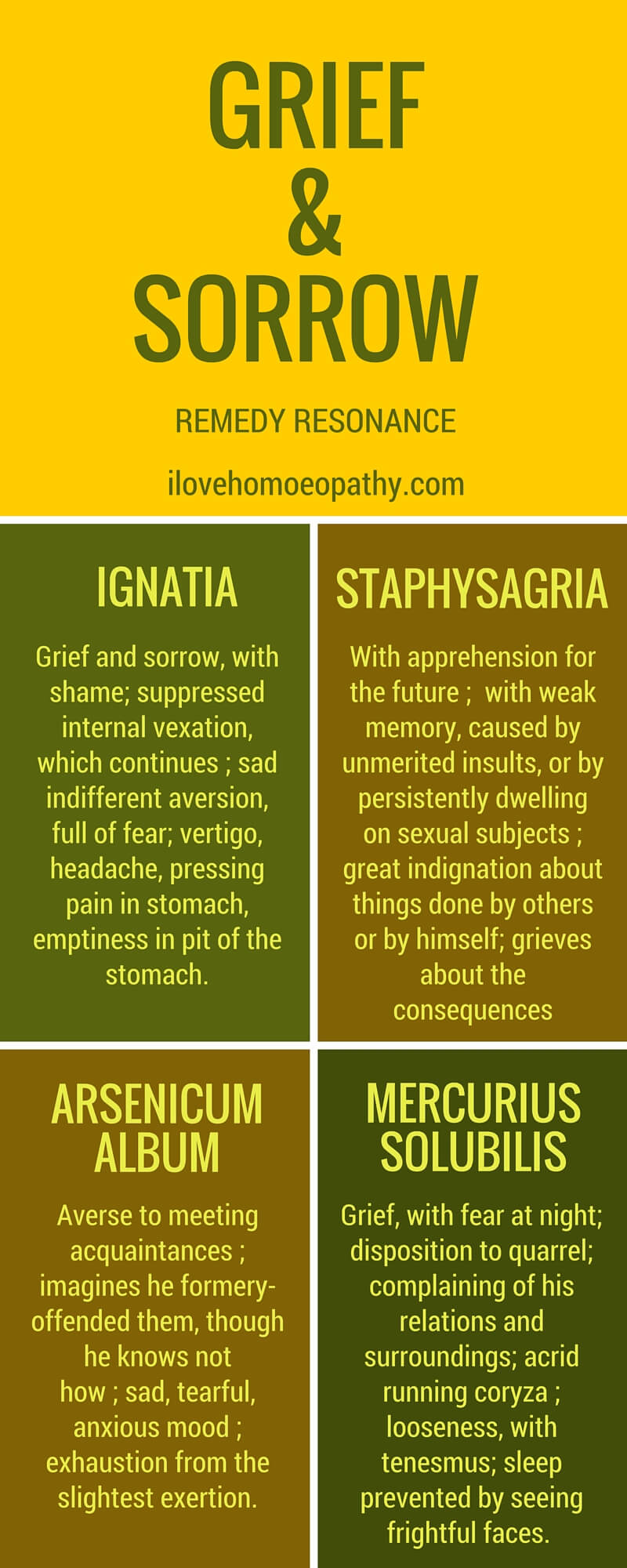
Sorrow is an emotion, feeling or sentiment. Sorrow "is more 'intense' than sadness... it implies a long-term state". Conventional doctors classify sadness or sorrow as Depression and suggest medication and anti depressants. Sadly this is not the case. You are sad because you have lost someone dear to you and sorrow is a natural response to loss. The body reacts to this state of sorrow differently. Some suppress their emotions, some cry. Homeopathy has wonderful remedies that recognise the body's reaction to grief and sorrow. It is a great way to bounce back to a normal state with no sedatives or anti depressants. Here we discuss some remedies that are indicated in grief and sorrow. You must consult a homeopath as he/ she will be able to identify the similimum. Ignatia. Grief and sorrow, with shame; suppressed internal vexation, which continues ; sad indifferent aversion, full of fear; vertigo, headache, pressing pain in stomach, emptiness in pit of the stomach ; amenorrhoea ; attacks like epilepsy or chorea; broods over imaginary troubles. Phosphoric acid. Headache in the morning; vertigo in the evening; long lasting aftertaste; food often thrown up; rolling rumbling in abdomen; looseness; epilepsy; emaciation. Staphisagria. With apprehension for the future ; hypochondriacal, apathetic, with weak memory, caused by unmerited insults, or by persistently dwelling on sexual subjects ; great indignation about things done by others or by himself; grieves about the consequences ; nervous weakness ; convulsions, with loss of consciousness ; sleepiness in the daytime. Arsenicum album. Mental derangement; averse to meeting acquaintances ; imagines he formery- offended them, though he knows not how ; sad, tearful, anxious mood ; exhaustion from the slightest exertion. Causticum. Chronic complaints after long-lasting grief or sorrow ; taciturn and distant; hopeless; thinking of complaints aggravates them, especially haemorrhoids. Lachesis. Great sadness and anxiety; chronic complaints after long-lasting grief or sorrow. Mercurius solubilis. Grief, with fear at night; disposition to quarrel; complaining of his relations and surroundings; acrid running coryza ; looseness, with tenesmus; sleep prevented by seeing frightful faces. Nux moschata. Palpitation from sadness; weeping mood, gloomy, fears to go to sleep; sleepy from overtaxing the mind; gastric ailments; hysteria; staggers in walking, falls often.
Remedy Resonance
GRIEF & SORROW
KM
Written by
Kartik Murtys
December 26, 2015· 2 min read
Sorrow is an emotion, feeling or sentiment. Sorrow "is more 'intense' than sadness... it implies a long-term state". Conventional doctors classify sadness or sorrow as Depression and suggest medication and anti depressants. Sadly this is not the case. You are sad because you have lost someone dear
Seek urgent care if:
- Severe symptoms should be assessed by a qualified clinician
- Breathing difficulty, chest pain, or neurological symptoms need urgent care
- Do not delay emergency treatment while reading educational content
Educational purpose only. This content does not replace medical advice, diagnosis, or treatment. Please consult a qualified practitioner before starting or stopping any treatment.